Rewind: June Community Spotlight-Autistic Amber
A personal Q&A with Substack writer Autistic Amber
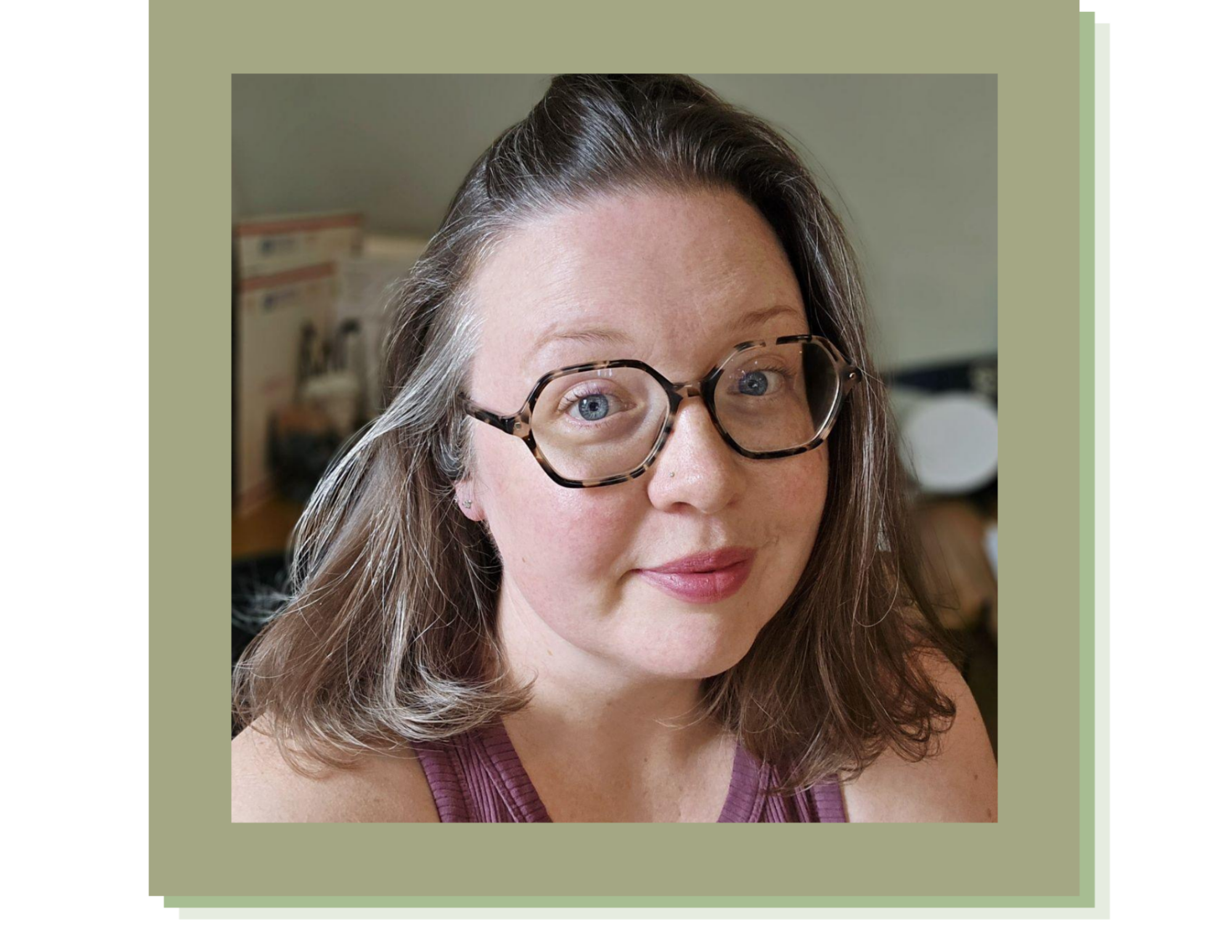
Scrolling through Autistic Amber’s post you get a sense of who she is. Mixing her lived-experience as an autistic woman with psychology and pop-culture, her voice is like a refreshing breeze on a sunny June day. That is why she is the NeuroDiverse Experience Lab: June Community Spotlight. Let’s learn more about this wonderful creator and writer.
[ ] = comments from interviewer Nisha J.
Introduce yourself to the community, who is Autistic Amber?
I'm a late-diagnosed autistic writer who loves connecting the dots between psychology, lived experience, and the hidden patterns that help us understand ourselves.
What type of neurospicy are you?
Autistic.
A book you can't put down?
Jane Eyre [Classic pick!]
The app or tool that improves your life:
Trello [It’s an organization tool/planner, you can learn more here]
One word that describes your relationship with your neurodivergence, right now?
Acceptance
Your writing sits at this intersection of psychology, pop culture, and late-diagnosed autism. When and how did you decide you were going to share your writing and experience on Substack?
I knew basically immediately after I was diagnosed. As I immersed myself in research, every new piece of information helped me make sense of another part of my life, and I couldn't stop thinking about how many other people were probably searching for those same answers. I realized I wasn't the only one trying to connect the dots after a late diagnosis. Since I was already a writer, I wanted to document that journey in real time, sharing what I was learning in the hope that someone else might finally find words for experiences they had carried for years.
You were right, you were not the only one trying to connect the dots. There such a heavy weight that comes after late-diagnosis. I’m so thankful you decided to share your voice with us; integrating your lived experience with pop culture references. Pop culture is often where a lot of people first encounter the language to name their own neurodivergence (a character, a meme, a viral thread). What do you think pop culture gets right about autism that clinical spaces don't and what are its limitations?
Pop culture has the freedom to capture the humanity of autism in a way that clinical spaces often can't. Diagnostic criteria exist to identify autism, but they aren't meant to tell the story of what it actually feels like to live as an autistic person. A well-written character can show nuance, relationships, humor, contradictions, and personality, reminding us that autism is only one part of a much larger human experience. Its biggest limitation is that it still has to be recognizable to a broad audience. That often means relying on familiar stereotypes and tropes, many of which were built around the presentation of autism in boys and men. Those portrayals can be validating for some people, but they leave many autistic women, high-masking individuals, and people with less stereotypical presentations wondering why they don't see ever themselves reflected in the stories being told.
Yes! Yes! and Yes! Especially for those of us whose identities intersect within marginalized groups. Your latest article, "10 Things I Thought Were Character Flaws That Were Actually Autism" really spoke to me. The constant misunderstanding or being perceived as rude hits hard. What inspired you to write this article? What do you want your readers to gain from it?
More than anything, the goal of that article is to let people know they aren't flawed and they aren't alone. Before my diagnosis, I spent decades believing that I was simply worse at being a person than everyone around me. Every misunderstanding, every social misstep, every task that seemed effortless for other people felt like evidence that I just wasn't trying hard enough or wasn't good enough. Receiving an autism diagnosis didn't erase those experiences, but it gave me the language to understand them. It helped me realize they weren't character flaws at all. My hope is that readers see themselves somewhere in that list and experience that same sense of recognition. There is something so powerful about discovering that the things you've carried alone for years have a name, an explanation, and an entire community of people thinking, "Me too!"
If you have a special interest, what is it?
Psychology [Me too! I think it’s our way of scientifically trying to understand people and ourselves]
Biggest neurodivergent myth you want debunked?
The myth that autistic people lack empathy. In reality, many autistic people, especially autistic women and other high-masking individuals, experience the opposite.
What are you working on right now that excites you?
I'm really excited about expanding my original post-diagnosis companion guide into a whole series of companions. [We will be right here excitedly waiting for this update!]
Where can the community find and support your work?
My Substack.
About Autistic Amber
I’m Amber, the writer behind Autistic Amber, where I explore late-diagnosed autism through the lens of psychology, lived experience, and compassionate pattern recognition. Diagnosed in adulthood, I write to help other autistic adults connect the dots of their own lives with greater clarity and self-understanding. My work blends personal essays, practical insights, and character analyses that help readers feel seen, understood, and a little less alone.
About NeuroDiverse Experience Lab
The NeuroDiverse Experience Lab is an organization that supports late-diagnosed neurodivergent adults through educational awareness, and community-power building. Our founder Tanisha Jarvis, M.A. (Nisha J.) is a neurodivergent educator, consultant, and AuDHD advocate. She is a Black/Afro-Latinx, Queer, neurodivergent, and chronically-disabled woman who uses this platform to reclaim power for marginalized voices. We provide guides on navigating adulthood through neurodivergence, platform neurodivergent professionals, provide training to organizations on integrating neuro-affirming policies, provide 1:1 neurodivergent coaching, and host peer support groups. Subscribe to our Substack page for more neurodiversity blog posts, community spotlights, and peer support groups.