August Community Spotlight: Dr. Cole Denisen
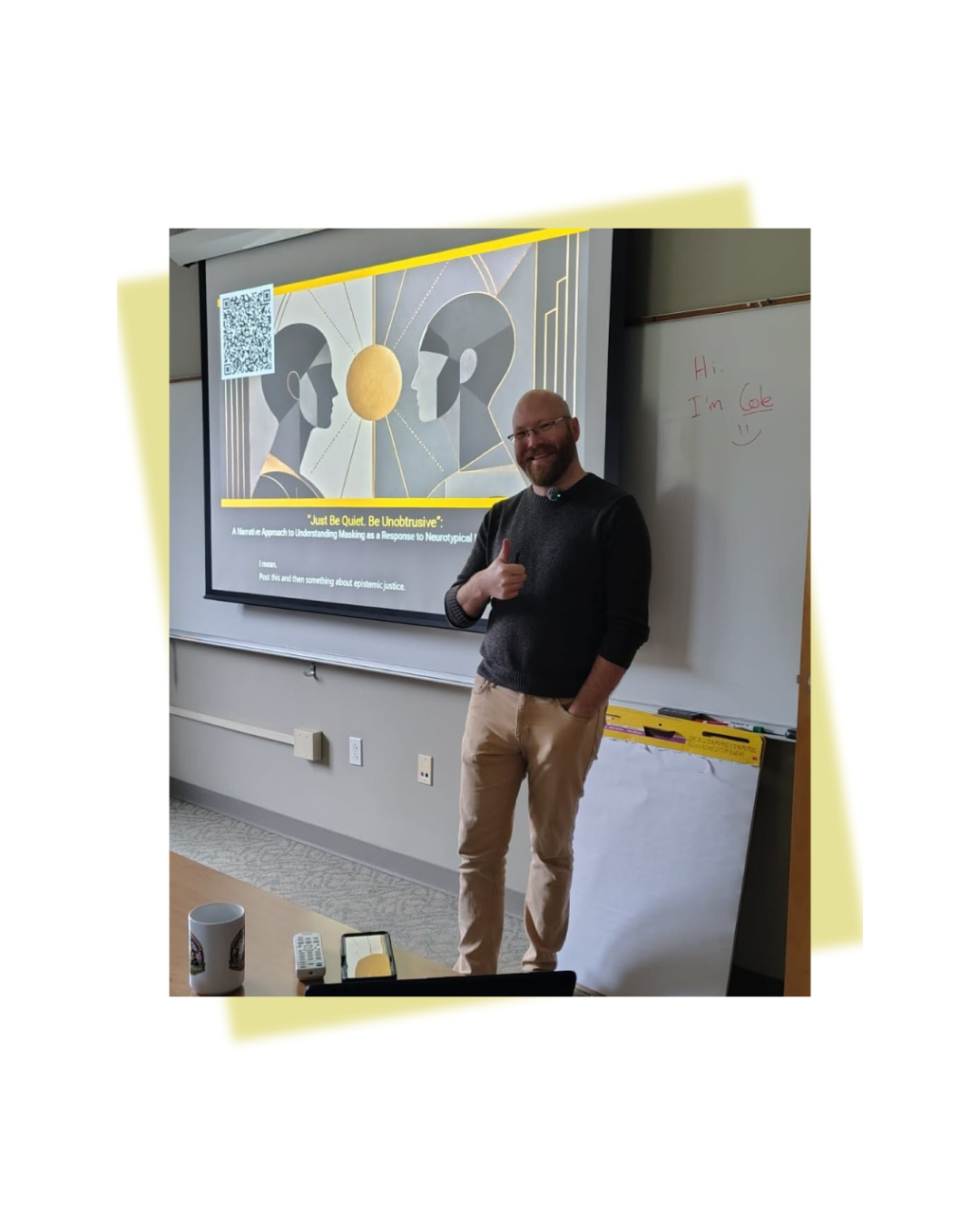
An Introduction to Neurodiversity Theory & A Professor Changing the Praxis Around Research
Knowledge is power. Who creates and control knowledge are the ones to shape society and reality. When we think about what we know about neurodiversity, the definitions, assumptions, and praxis—the direct, clinical application of theory in the real world—has been defined by people who do not live our experience.
Although we like to think science is infallible—objective and balanced, it is not. Humans are complex beings with ingrained biases, prejudices, perspectives, and limitations which seeps into the fabric of all that we create, build, and theorize. For example, let’s take a look at the conceptualization of autism. The early foundation and building blocks of how we define autism today, is defined through eugenics. Furthermore, the socio-historical praxis of disability science in America has led to the real-time oppression of disabled/neurodivergent individuals through discriminatory laws, forced sterilization , and even physical violence.
Today, we are in conversation with Dr. Cole Denisen. A professor of disabilities and neurodiversity studies at Landmark College. His work, neurodiversity theory, integrates epistemology with emancipatory pedagogy. It’s a framework that centers neurodivergent voices in the methodological research, theory, and application of neurodiversity studies.
I’m delighted [I’m nerding out right now!] to introduce Dr. Cole Denisen:
Introduce yourself to the community, who is Dr. Cole Denisen?
Asst. Professor of Education: I teach college courses on critical thinking, disability history, autistic culture, and neurodiversity.
What type of neurospicy are you?
Prefer neurodivergent, but AuDHD is fine as well.
A book you can't put down?
Mechanicum
The research finding or theory that changed how you think about neurodivergence?
I draw heavily on critical theory and the embodied scholarship of feminists of color, particularly theories of the flesh.
One word that describes your relationship with your neurodivergence, right now?
Culture.
Your research centers neurodiversity theory. Can you explain the framework and how it differs from other theories about neurodivergence?
Neurodiversity theory draws on the embodied experiences of neurodivergent people while also building on traditions of critical theory and other ways of knowing developed by marginalized scholars. Together, these perspectives help illuminate how dominant assumptions, perspectives, and realities become normalized and reproduced through social structures, institutions, and everyday interactions.
How does your own relationship with neurodivergence shape your methodology?
I am neurodivergent. It shapes how I see, understand, and make meaning of the world. My neurodivergence is inseparable from my methodology because it informs not only the questions I ask, but also how I interpret, analyze, and understand knowledge itself.
What are the implications of neurodiversity theory in workplaces and institutions? What are the changes workplaces and institutions can make to implement the neurodiversity theory framework?
The implications are profound. If we understand neurodiversity as an epistemic position, it changes far more than our attitudes toward neurodivergent people - it changes how institutions produce knowledge, make decisions, and define expertise. Rather than asking only how workplaces and schools can better accommodate neurodivergent people, neurodiversity theory asks how those institutions might themselves need to change. It challenges who counts as an expert, whose knowledge is considered legitimate, and how policies, practices, and organizational cultures are designed. Implementing a neurodiversity framework therefore means more than providing accommodations; it means rethinking the assumptions and systems that privilege some ways of thinking, communicating, and knowing while marginalizing others.
If you have a special interest, what is it?
The history of the US eugenics movement and Magic: the Gathering :)
Biggest neurodivergent myth you want debunked?
That neurodivergent people lack sociality. That we lack culture.
What are you working on right now that excites you?
I'm currently exploring what I'm calling autistic epistemics: the idea that autism is not simply a different way of behaving or communicating, but a distinct way of knowing and making sense of the world. I'm interested in what happens when we move beyond viewing autistic people as subjects of research and instead recognize autistic ways of knowing as legitimate sources of theory, methodology, and knowledge production. What excites me most is that this perspective has the potential to reshape how we think about expertise, research, education, and organizational practice. Rather than asking how autistic people can better fit existing systems, autistic epistemics asks how our institutions, research methods, and assumptions about knowledge might need to change when autistic perspectives are treated as epistemically valuable rather than merely accommodated.
Where can the community find and support your work?
My website & on LinkedIn where I post regularly.
About Dr. Cole Denisen
Cole Denisen is a neurodivergent educator, researcher, and writer behind The Neurodivergent Scholar. His work explores neurodiversity theory, autistic epistemics, and disability in higher education, examining how neurodivergent perspectives can transform research, teaching, and institutions. He is an Assistant Professor of Education at Landmark College. Learn more at TheNeurodivergentScholar.com or connect with him on LinkedIn.
About NeuroDiverse Experience Lab
The NeuroDiverse Experience Lab is an organization that supports late-diagnosed neurodivergent adults through educational awareness, and community-power building. Our founder Tanisha Jarvis, M.A. (Nisha J.) is a neurodivergent educator, consultant, and AuDHD advocate. She is a Black/Afro-Latinx, Queer, neurodivergent, and chronically-disabled woman who uses this platform to reclaim power for marginalized voices. We provide guides on navigating adulthood through neurodivergence, platform neurodivergent professionals, provide training to organizations on integrating neuro-affirming policies, provide 1:1 neurodivergent coaching, and host peer support groups. Learn more.